If you've ever bought a property, someone probably told you to "get a survey done." But what does that actually mean? Who exactly are these people, and what do they actually do?
I'm Robert Walsh, founding director of Balham Surveyors, and I've been asked this question hundreds of times. Let me explain — clearly and honestly — what a chartered building surveyor does and why the "chartered" part matters so much.
What Is a Building Surveyor?
A building surveyor is a professional who assesses the condition, construction and quality of buildings. In the context of residential property, a building surveyor's primary role is to carry out building surveys — inspecting properties and writing reports that describe their condition, identify defects, and advise on repairs and maintenance.
But building surveying is a much broader profession than that. Building surveyors also work in:
- Party wall matters — serving notices, preparing party wall awards, and managing disputes between neighbouring property owners
- Property valuation — assessing the market value of properties for a range of purposes
- Project management — overseeing building works on behalf of clients
- Dilapidations — assessing the condition of commercial premises at the end of a lease
- Expert witness work — providing evidence in legal disputes involving building defects or party wall matters
What Makes Someone a "Chartered" Surveyor?
The word "chartered" is important. A chartered building surveyor is a surveyor who has been awarded the designation of Chartered Member by a recognised professional body — most commonly the Royal Institution of Chartered Surveyors (RICS). This involves:
- Completing a relevant degree (typically a BSc or MSc in Building Surveying or a related subject)
- Undertaking a structured period of supervised professional experience
- Passing the Assessment of Professional Competence (APC) — a rigorous assessment of knowledge, skills and professional conduct
- Committing to ongoing continuing professional development (CPD)
RICS-chartered surveyors are bound by RICS's strict code of ethics and professional conduct. They carry professional indemnity insurance. And they are subject to RICS's disciplinary procedures if they fall below the required standards.
What Happens During a Building Survey?
Here's what a building surveyor actually does on survey day:
- External inspection — Walking around the outside of the property, assessing the condition of the roof coverings (viewed from ground level and from within the loft where accessible), external walls, windows, doors, gutters, drainage and outbuildings.
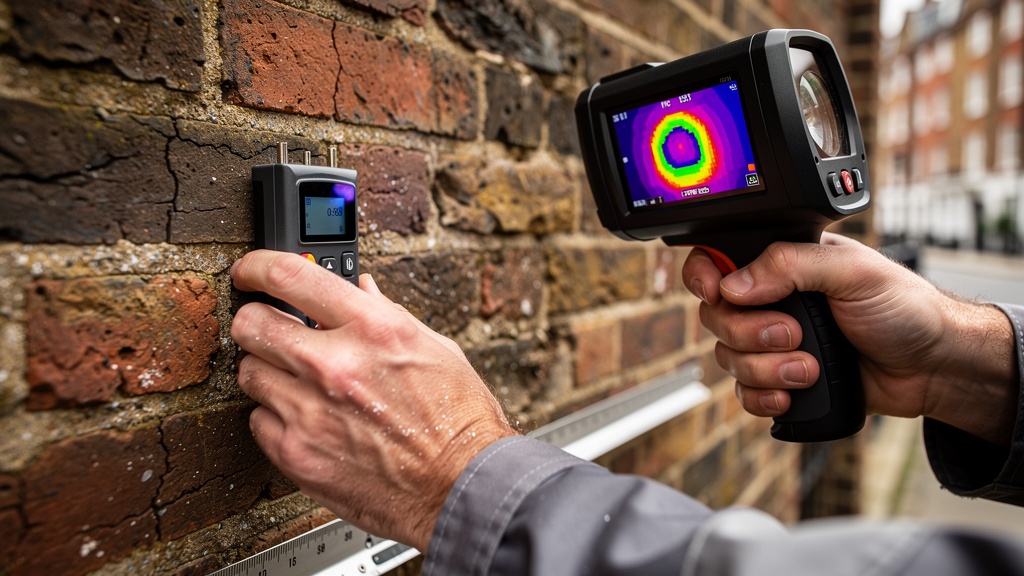
- Internal inspection — Moving systematically through every room, assessing walls, floors, ceilings, windows and services. Using a moisture meter to measure damp levels. Looking in the loft and under floors (where accessible).
- Services assessment — Commenting on the visible condition of plumbing, heating and electrical installations (without testing them — that requires specialist contractors).
- Photography — Documenting defects and areas of concern for inclusion in the report.
The inspection typically takes 2–4 hours for a Level 3 survey, less for a Level 2. After the visit, the surveyor writes up the report — a process that typically takes a further 3–5 hours for a comprehensive Level 3 survey.
What Qualifications Should I Look For?
When engaging a surveyor, look for:
- MRICS — Member of the Royal Institution of Chartered Surveyors. Full chartered membership.
- FRICS — Fellow of the Royal Institution of Chartered Surveyors. Fellow status is awarded for sustained contribution to the profession.
- AssocRICS — Associate of RICS. A lower level of RICS membership that doesn't require a degree but is still a recognised professional designation.
- MCIOB — Member of the Chartered Institute of Building. Particularly relevant for surveyors with a construction background.
- RPSA Member — Member of the Residential Property Surveyors Association.
You can verify any surveyor's credentials directly on the RICS website at rics.org.
Why Shouldn't I Just Use a Handyman or Builder?
A handyman or builder might be able to identify visible problems — a leaking roof, a cracked wall, a faulty boiler. But they're not trained to produce a professional building survey report, and they have no regulatory accountability. More importantly, they may have a financial interest in recommending work.
A chartered building surveyor's value lies not just in identifying what they can see, but in interpreting it: understanding what the pattern of cracking means, recognising the signs of historic subsidence, knowing when a damp patch is condensation and when it's something more serious. That interpretive skill comes from years of training and experience — and it's what the "chartered" designation is there to guarantee.
The best way is to search the RICS "Find a Surveyor" tool at rics.org, which lists all RICS-regulated surveyors by area. You can also search for members of the RPSA or CIOB. Ask for recommendations from your solicitor or mortgage broker — or contact us directly at Balham Surveyors for a free, no-obligation consultation.
Professional indemnity insurance (PII) covers a professional if a client suffers a financial loss as a result of the professional's advice or negligence. All RICS-regulated surveyors are required to hold PII. This means that if a surveyor misses a significant defect that subsequently causes you financial loss, you have recourse — both against the surveyor directly and through RICS's regulatory process.
Building surveyors can advise on matters related to building regulations and planning in the context of building works. However, for complex planning matters, a planning consultant or architect is the more appropriate professional. We'll always tell you when something falls outside our area of expertise and recommend the right specialist.