If you've been researching property surveys, you've probably come across the terms "Level 2 home survey" and "Level 3 building survey" — and wondered which one is right for you. It's one of the most common questions our surveyors in Balham are asked, and it's an important one to get right.
Choose the wrong survey level and you might end up paying for more than you need — or, more worryingly, not finding out about serious issues before you exchange contracts. Let me walk you through the key differences.
The Quick Answer
Before I get into the detail: if the property you're buying is a standard Victorian or Edwardian terraced house or semi in Balham or South London, and it's over 100 years old, I'd lean towards recommending a Level 3 building survey. The extra cost is usually modest relative to the purchase price, and the additional depth of information is almost always worth it for properties of this age.
For most flats, modern properties (post-1970) and well-maintained houses built after about 1930, a Level 2 home survey is usually sufficient.
What Is a RICS Level 2 Home Survey?
The RICS Level 2 home survey (previously called the Homebuyer Report) is a thorough inspection of the property's condition, presented in a standardised format using a traffic-light rating system:
- Condition 1 (Green): No repair is currently needed. The property has been maintained or is new and does not need to be repaired or replaced.
- Condition 2 (Amber): Defects that need repairing or replacing but are not considered to be either serious or urgent. The property is still habitable.
- Condition 3 (Red): Defects that are serious and/or need to be repaired, replaced or investigated urgently.
The Level 2 survey also comments on any issues that need legal investigation, risks arising from the area (such as flood risk or mining), and any matters that could affect the value of the property. An optional market valuation can be added.
What Is a RICS Level 3 Building Survey?
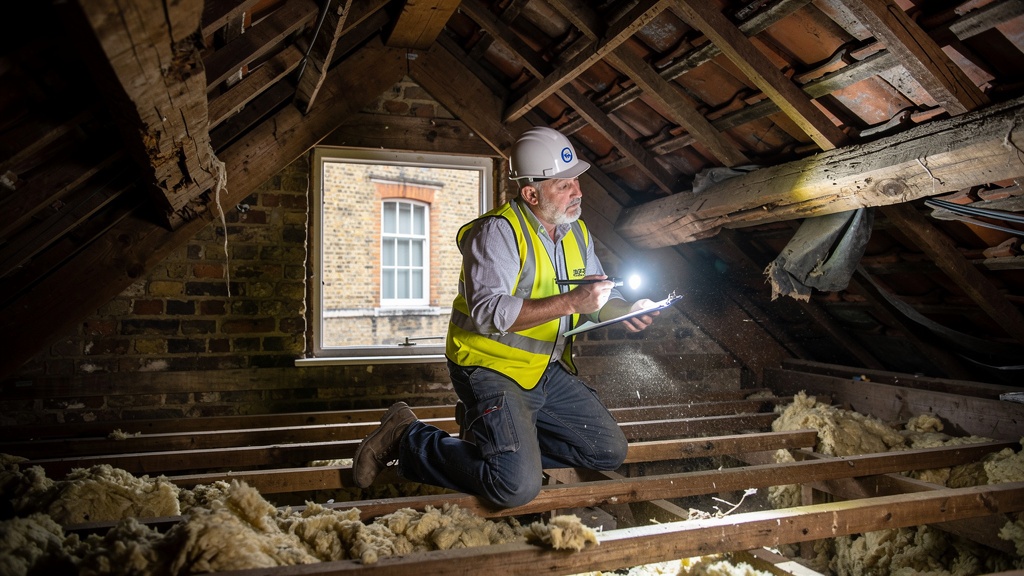
The RICS Level 3 building survey is the most comprehensive survey available. It's significantly more detailed than the Level 2 in several key ways:
- Greater depth of inspection: Where a Level 2 surveyors the visible and accessible parts of the building, a Level 3 goes further — investigating concealed areas, testing services and examining the structure in more detail.
- Description of defects: Rather than just flagging issues with traffic-light ratings, a Level 3 provides detailed written descriptions of defects, including their likely cause and the extent of any damage.
- Cost estimates: A Level 3 survey includes indicative cost estimates for all significant repair work — invaluable for budgeting and negotiating.
- Longer on-site time: A Level 3 inspection typically takes 30–60% longer than a Level 2 inspection on the same property.
Side-by-Side Comparison
| Feature | Level 2 | Level 3 |
|---|---|---|
| Traffic-light ratings | ||
| Detailed defect descriptions | Basic | Detailed |
| Cost estimates | ||
| Cause of defects explained | Limited | Full |
| Subfloor inspection | If accessible | Thorough |
| Optional market valuation | ||
| Starting price (Balham Surveyors) | £395 | £595 |
When to Choose Level 2
- The property was built after about 1930 and is of conventional construction
- The property is in generally good condition with no obvious signs of defects
- You're buying a leasehold flat in a well-maintained block
- The property has been significantly modernised or recently renovated
When to Choose Level 3
- The property is pre-1900 (Victorian or earlier)
- The property is of unusual or non-standard construction
- There are visible signs of defects — cracks, damp, movement, etc.
- The property has been substantially altered or extended
- You're planning significant renovation work after purchase
- The property is large (4+ bedrooms) or high-value
- You simply want the most comprehensive information possible
What Our Surveyors Recommend for South London
Balham, Tooting, Wandsworth, Clapham and Streatham are dominated by Victorian and Edwardian housing stock — most built between 1880 and 1914. For these properties, our recommendation is almost always a Level 3 building survey.
The extra cost — typically around £200 more than a Level 2 — is minimal relative to the purchase price. And for a property of this age, the additional depth of information a Level 3 provides is almost always justified. We regularly identify issues in Level 3 surveys that would not have been captured in a Level 2, and which have real implications for the purchase price or the buyer's long-term plans for the property.
No — the level of survey is agreed before the inspection. If our surveyor identifies significant concerns during a Level 2 inspection that they feel warrants further investigation, they'll note this in the report and recommend a specialist follow-up. But the inspection itself can't be expanded mid-survey.
A formal market valuation is not typically included in a Level 3 survey, but it can be added as an optional extra. If you need a valuation for mortgage purposes, bear in mind that most lenders require a separate RICS Red Book valuation.
At Balham Surveyors, our Level 3 building surveys start at £595 compared to £395 for a Level 2. The price difference will depend on the size of the property — for a large property, the difference may be £300–£400. Given the purchase prices in South London, this is a very modest additional investment for considerably more information.
Yes — "full structural survey" is an older, colloquial term for what is now formally called the RICS Level 3 building survey. The official terminology changed when RICS introduced the current three-level framework in 2021.
"Homebuyer survey" or "homebuyer report" are older terms for what is now the RICS Level 2 home survey. The product itself is largely the same; the terminology changed when RICS updated its survey framework in 2021.