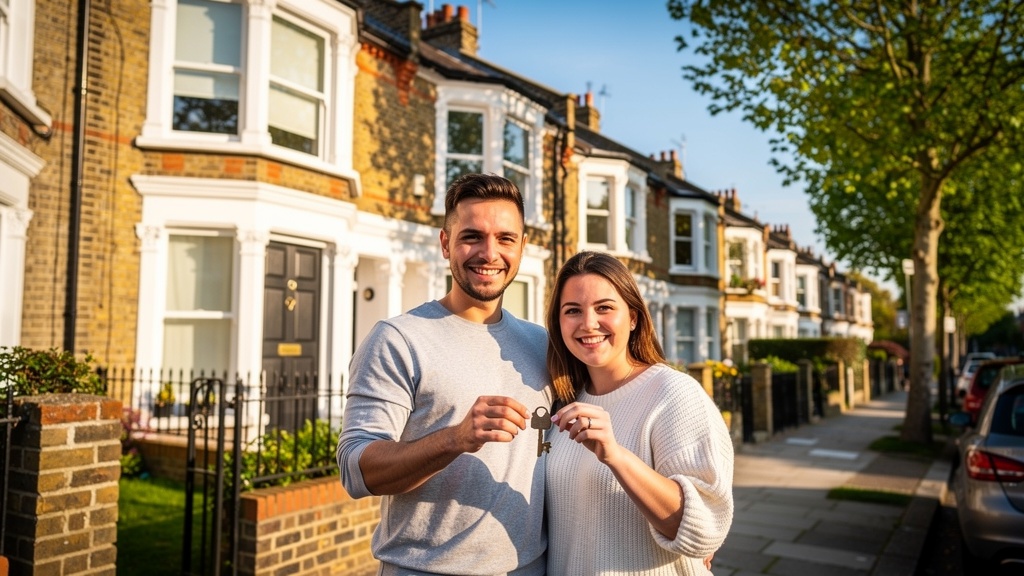
Buying your first home is one of the most exciting — and terrifying — things you'll ever do. There's a point in every first-time buyer's journey when someone mentions a "survey" and suddenly you're Googling furiously at midnight, trying to work out what a homebuyer report actually is, whether you really need one, and why it costs so much.
I've been a building surveyor in Balham for over ten years, and I talk to first-time buyers every single week. The questions are almost always the same. So I've written this guide to answer all of them, as simply and honestly as I can.
What Is a Property Survey?
A property survey is a professional inspection of the physical condition of a home. It's carried out by a qualified surveyor who visits the property, examines everything they can access, and writes a report describing what they found.
That report tells you what condition the property is in — what's fine, what needs attention, and what might cost you serious money down the line. It's the difference between knowing what you're buying and hoping for the best.
Crucially, a survey is completely separate from the mortgage valuation your lender carries out. A lender's valuation exists to protect the lender — it's a tick-box exercise to confirm the property is worth roughly what you're paying for it. It is not a survey. It won't tell you about damp in the walls, movement in the structure or a roof that's three years from failure.
Do First-Time Buyers Really Need a Survey?
Yes. Emphatically, yes. I know £400–£600 feels like a lot of money when you're stretching every penny to make a purchase happen. But consider this: the average property price in Balham is around £600,000. A survey costs perhaps 0.08% of that. And in my experience, surveys help buyers negotiate price reductions — or spot deal-breaking issues — far more often than most people expect.
"Last year I surveyed a flat in Tooting for a first-time buyer. She was about to pay £380,000 for it. The survey revealed severe penetrating damp, a failing flat roof and inadequate party wall separation. She used the report to renegotiate to £352,000. The survey cost £425. Do the maths."
— James Hartley, Chartered Building Surveyor
Even if the survey comes back completely clean, that peace of mind has genuine value. You're committing to a mortgage that might last 25–30 years. Knowing the property you're buying is sound is worth paying for.
Which Survey Do First-Time Buyers Need?
This is the question I get asked most often, and the honest answer is: it depends on the property. There are three main RICS survey levels:
RICS Level 1 – Condition Report
The most basic survey. Uses a traffic-light system to flag the overall condition of the property's main elements. It gives you very limited detail about any issues it finds and doesn't provide advice on repairs or costs. Suitable for new-build homes in good condition, but honestly — for most properties in South London, it's not enough.
RICS Level 2 – Home Survey (formerly the Homebuyer Report)
This is what most first-time buyers in Balham need. The RICS Level 2 home survey gives you a thorough overview of the property's condition using the same traffic-light rating system, but with much more detail about what each rating means and what you should do about it. It covers all accessible areas, checks for damp and timber issues, and gives you a priority list of anything that needs action.
A Level 2 survey is suitable for most properties built after about 1900 that are in reasonable condition. If you're buying a two-bed Victorian conversion in Balham or Clapham, a Level 2 is almost certainly the right choice.
RICS Level 3 – Building Survey (formerly the Full Structural Survey)
The most detailed survey available. If the property is pre-1900, substantially altered, showing signs of significant defects, or if you simply want the most comprehensive assessment possible — this is what you need. It includes a full structural analysis, detailed descriptions of any defects, their causes, and cost estimates for repairs.
For a first-time buyer stretching their budget on an older period property, the Level 3 building survey is often the wiser investment. Yes, it costs more — but it gives you so much more.
What Happens During a Survey?
On the day of the survey, your surveyor will visit the property and carry out a thorough inspection. This typically takes 2–4 hours, though for larger or more complex properties it can take longer. They'll inspect every accessible part of the building — inside and out — including:
- The roof (viewed from the ground and, where accessible, from inside the loft)
- External walls, foundations and drainage
- Internal walls, floors and ceilings
- Windows, doors and joinery
- The services (heating, plumbing and electrics — though not tested)
- Any outbuildings or garages
After the inspection, your surveyor writes up the report. At Balham Surveyors, we aim to deliver reports within 5–7 working days of the inspection.
Can I Be Present During the Survey?
You can be, but most surveyors will advise you not to attend — at least not for the whole inspection. The surveyor needs to concentrate fully on every part of the property, and an hour-long conversation with an anxious first-time buyer can get in the way of that. Instead, ask your surveyor for a follow-up call after you receive the report. Any good surveyor will be happy to walk you through the key points.
What If the Survey Finds Problems?
This is often what first-time buyers are most worried about — and it's worth remembering that most surveys do find something. Even well-maintained properties usually have a few items requiring attention. The question is whether those items are minor (like repointing mortar joints or replacing a few roof tiles) or significant (like structural movement or major damp ingress).
If the survey finds significant issues, you have options:
- Renegotiate the price — use the survey to ask for a price reduction that reflects the cost of remedial work
- Ask the vendor to carry out repairs before exchange
- Withdraw from the purchase if the issues are too serious or the vendor won't negotiate
Your surveyor can advise on which approach is most appropriate for your situation.
How Much Does a Survey Cost in Balham?
Survey costs vary depending on the size, type and condition of the property. As a rough guide:
- RICS Level 1 Condition Report: from £275
- RICS Level 2 Home Survey: from £395
- RICS Level 3 Building Survey: from £595
These fees are fixed — you won't get any nasty surprises after the survey. And remember: a survey that helps you negotiate even a small reduction in the purchase price will typically pay for itself many times over.
How Do I Book a Survey?
It's simple. Get in touch with our team using the form on our contact page, tell us about the property (type, size, postcode and any specific concerns), and we'll advise on the right survey level and provide a clear, fixed-price quote — usually within 2 working hours.
Key Takeaways for First-Time Buyers
- Always get an independent survey — never rely on the mortgage lender's valuation alone
- For most South London properties, a RICS Level 2 home survey is the right choice
- For older, larger or unusual properties, a Level 3 building survey is worth the extra cost
- A survey that finds problems isn't a disaster — it's information that protects you
- The survey cost is tiny compared to what it can save you
Frequently Asked Questions
Once you've confirmed your instruction and paid the fee, we typically aim to carry out the survey within 5 working days, subject to access being available. In practice, we often manage sooner than that.
A survey assesses the physical condition of the property. A valuation assesses its market value. They are completely different things, carried out for different purposes. The mortgage valuation your lender uses is not a survey and does not protect you as a buyer.
Before exchange of contracts, yes — you can pull out of a purchase for any reason without penalty (though you may lose solicitor fees incurred to date). After exchange, you are legally committed. This is why getting a survey before exchange is so important.
A market valuation is an optional add-on to the RICS Level 2 home survey. It's worth considering if you want an independent view of the property's value — particularly if you're concerned the asking price may be too high.
Read it carefully, note any condition 2 or 3 items, and call your surveyor to discuss. They'll help you understand what the key findings mean, how urgent any issues are, and whether they should affect your negotiation with the vendor. Don't panic — even a long list of issues doesn't necessarily mean the property is a bad buy.