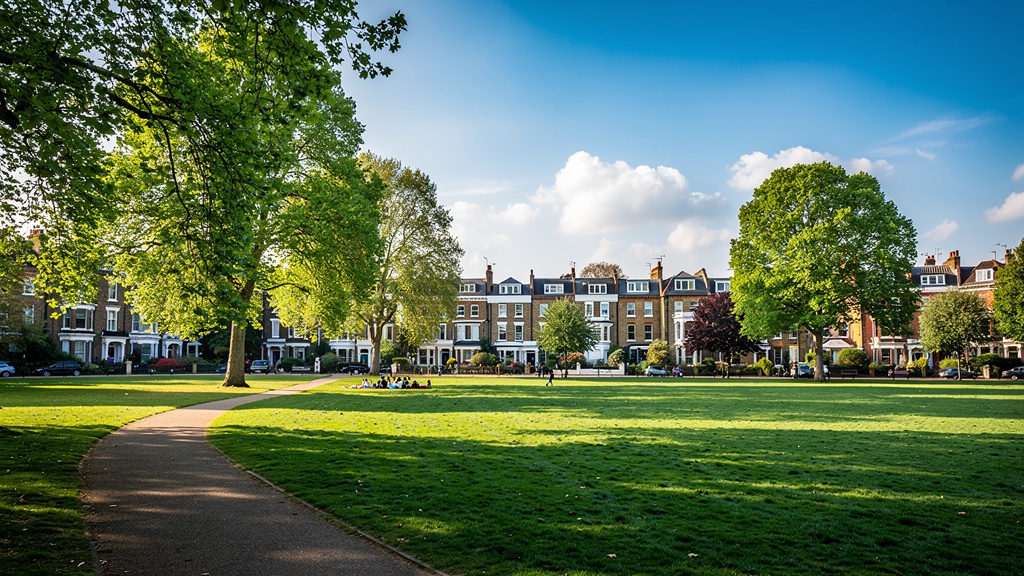
As the founding director of Balham Surveyors, I've been surveying properties in Balham and the surrounding areas for over 20 years. I've seen the area change enormously — from a relatively overlooked corner of South West London to one of the most sought-after residential locations south of the river.
Here's what I know about buying in Balham — the housing stock, the common issues to watch out for, and why a survey is even more important here than in many other parts of London.
Balham: A Brief Overview
Balham (SW12) sits in the London Borough of Wandsworth, roughly equidistant between the City and the outer suburbs. It's on the Northern Line — Balham station is about 20 minutes from London Bridge and 25 minutes from Bank — which makes it genuinely attractive for commuters who want suburban living without sacrificing accessibility.
The area is bounded to the north by Wandsworth Common (one of the finest open spaces in South London), and to the south by Tooting Bec Common. Balham High Road runs through the heart of the area, lined with independent shops, cafes, restaurants and the landmark Balham Leisure Centre.
The Housing Stock
Balham's residential streets are dominated by late Victorian and Edwardian housing — most built between 1880 and 1914. The typical property is a two- or three-storey terraced house, often with a bay front, a rear addition, and a small garden.
Many of these houses have been converted into flats — sometimes into two flats, sometimes into as many as four. Purpose-built mansion blocks from the 1920s and 30s can also be found, particularly closer to Balham station and along the larger roads.
More recent developments — mostly blocks of flats — have appeared in the last 20 years, particularly around the station and in the former commercial area to the south.
What Our Surveys Find Most Often in Balham
After hundreds of surveys in the SW12 area, these are the issues we encounter most frequently:
Bay Window Movement
Almost universal in Balham's Victorian terraces. Bay windows are typically built on their own shallow foundations and tend to settle at a different rate from the main structure. Most movement is historic and stable, but it's something we always look at carefully. Clay subsoil across much of the area means the risk of ongoing movement — particularly in dry summers — is real.
Penetrating Damp from Defective Gutters and Downpipes
A huge proportion of Balham properties have blocked or failing gutters that allow water to saturate the external walls. The result is penetrating damp that soaks into the masonry and appears on internal walls. It's one of the most preventable forms of property damage — but also one of the most common.
Chimney Defects
Most Victorian terraces in Balham have two or more chimney stacks. By the time properties come to market, these are often in a poor state — with failed flashings, spalled brickwork and deteriorated pointing. We always check them carefully.
Subfloor Ventilation Issues
Ground-floor timbers are at risk in many Balham properties, particularly where airbricks have been blocked or where ground levels have risen around the base of the building. Timber rot in suspended floors is more common than most buyers realise.
Unapproved Building Work
The loft conversion and extension boom of the 2000s and 2010s left many Balham properties with structural alterations carried out without proper building regulations consent. This affects mortgage lending and can create problems at future sale. We always investigate and flag any evidence of unapproved work.
Balham's Clay Subsoil: The Subsidence Risk
Much of Balham sits on London Clay — a shrinkable subsoil that contracts in dry summers and expands in wet winters. Near mature trees, this seasonal movement can be significant enough to cause structural damage to foundations. This is known as "shrinkable clay subsidence" and it's a genuine risk in Balham, particularly on streets with mature lime or poplar trees.
Our surveys always check for evidence of subsidence and recommend further investigation — usually a structural engineer's report — where we have concerns.
Why You Need a Survey in Balham
I'm biased, obviously — but I genuinely believe that the nature of Balham's housing stock makes independent building surveys more important here than in many parts of London. These are old properties. They have 100+ years of history. They've been extended, altered, repaired and maintained (or not) by many different owners over many generations.
The best of them are exceptional homes. The worst are expensive money pits dressed up in attractive Victorian clothing. A thorough survey by an experienced surveyor in Balham is the only reliable way to tell the difference.
Balham property prices vary significantly depending on property type and proximity to the station and Common. As a rough guide (early 2025): one-bedroom flats typically range from £350,000–£500,000; two-bedroom flats from £450,000–£700,000; two-bedroom houses from £550,000–£800,000; and three-bedroom houses from £700,000–£1.2 million+. Properties near Wandsworth Common command a significant premium.
Balham typically sits between Clapham (more expensive, more nightlife) and Tooting (slightly less expensive, more multicultural) in terms of both price and character. It's generally considered better value than Clapham and slightly more "established" than Tooting in terms of its demographic mix and amenities.
Very much so. The combination of good schools, two large commons, strong transport links and a thriving high street makes Balham one of the most popular destinations for young families in South London. The housing stock — predominantly Victorian terraces with gardens — is well-suited to family living.