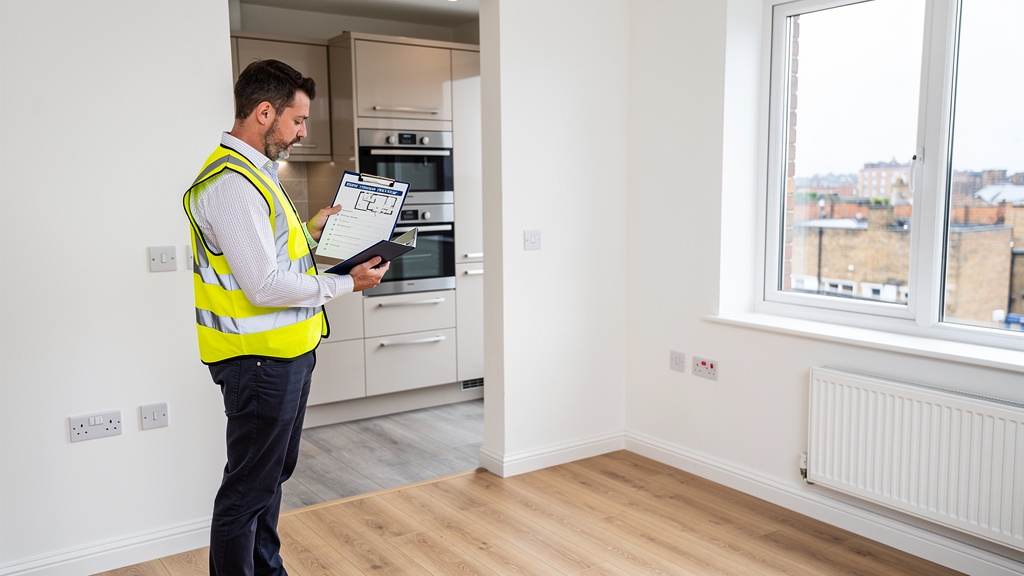
South London's property market is dominated by leasehold flats — converted Victorian houses, purpose-built mansion blocks, and modern developments all sold on a leasehold basis. If you're buying a flat in Balham, Clapham, Tooting or anywhere nearby, there's a good chance it's leasehold.
Leasehold purchases come with a unique set of considerations that go beyond what a standard building survey covers. Here's what our building surveyors at Balham Surveyors look for when we survey a leasehold property — and why it matters.
What Is Leasehold?
When you buy a leasehold property, you're buying the right to occupy the property for a fixed term — the "lease." The building itself is owned by the freeholder (also called the landlord). The lease sets out the rights and obligations of both the leaseholder and the freeholder, including the payment of ground rent and service charges.
The length of the remaining lease is a critical factor in any leasehold purchase. Most mortgage lenders won't lend on a property with fewer than 70–75 years remaining on the lease. And as the lease gets shorter, the cost of extending it increases significantly.
What We Inspect in the Flat
Our leasehold survey starts with the flat itself — a thorough inspection of everything we can access inside the property:
- Structural condition of walls, floors and ceilings
- Condition of windows, doors and joinery
- Damp and moisture assessment using moisture meters and, where appropriate, thermal imaging
- Condition of bathroom and kitchen fixtures
- Visible condition of services (plumbing, heating, electrics — visual only)
What We Inspect Beyond the Flat
This is where a leasehold survey goes beyond a standard Level 2 or Level 3 inspection. Because you're buying into a shared building, the condition of the whole building is relevant to your purchase. We inspect all common areas that are accessible, including:
- The roof — condition of coverings, structure (where accessible), flashings and gutters
- External walls and pointing — particularly relevant for properties with cavity walls or rendered elevations
- Common areas — hallways, stairwells, communal gardens and car parks
- Shared services — communal boilers, entry systems, lifts (if applicable)
- Any evidence of past or ongoing structural problems in the building
The Service Charge Issue
This is often the most important aspect of a leasehold purchase that buyers overlook. Service charges are the payments you make to the freeholder (or managing agent) to cover the maintenance and repair of the building's shared areas and fabric.
If the building is in good condition, service charges are typically modest and predictable. But if the building has significant deferred maintenance — a roof that needs replacing, external walls that need repointing, a communal boiler that's on its last legs — you could face significant "major works" bills in the near future, often totalling tens of thousands of pounds.
Our survey comments on the apparent condition of the building's fabric and flags any elements that appear to be approaching the end of their serviceable life. We'll tell you if the roof looks like it needs replacing soon — and give you a rough cost estimate — so you can factor that into your decision.
What We Don't Check (But You Should)
A building survey assesses physical condition, not legal or financial matters. Before you commit to a leasehold purchase, your solicitor should check:
- The length of the remaining lease and the cost of extending it
- The ground rent provisions (particularly important since the Leasehold Reform Act)
- Service charge accounts for the past 3 years
- Any planned or recent major works and whether a reserve fund exists
- The managing agent's reputation and track record
- Whether the building has cladding issues (particularly important for flats above four storeys)
EWS1 Forms and Cladding
For flats in blocks above 11 metres (approximately 4 storeys), lenders increasingly require an EWS1 (External Wall System) assessment to confirm the external wall materials are safe. This became a major issue following the Grenfell Tower fire and continues to affect the mortgageability of many flats in South London.
We'll always flag any concerns about external cladding or wall systems and recommend appropriate specialist investigation where relevant.
Most mortgage lenders require a minimum of 70–80 years remaining on the lease at the time of application (some require more). As a general rule, if the remaining lease is below 80 years, you should be thinking about extending it — the cost increases significantly below that threshold, as the landlord becomes entitled to a share of the "marriage value" when the lease is extended.
For most leasehold flats in South London, we recommend a RICS Level 2 home survey as a minimum. If the flat is in an older building, shows signs of problems, or is in a building that appears to be poorly maintained, we'd recommend a Level 3 building survey. Our specialist leasehold survey service provides the additional coverage needed for leasehold properties.
Your solicitor can request information from the managing agent about any planned major works and the building's reserve fund. However, this information isn't always complete or current. Our survey gives you an independent assessment of the building's condition that can supplement — and sometimes challenge — what the managing agent's information says.
Service charges are set by the freeholder or managing agent and are generally not negotiable as part of the purchase. However, if our survey reveals that the building is in poor condition and significant major works are likely, you can use this information to negotiate the purchase price — in effect, discounting it to reflect the anticipated future expenditure.